
What happens to the calls your optometry practice misses?
Most callers who can’t get through don’t leave a voicemail. They ring the next practice on Google. Why the phone always loses to the patient at your desk, and how OmniDesk picks up the calls your team can’t reach, day and night.
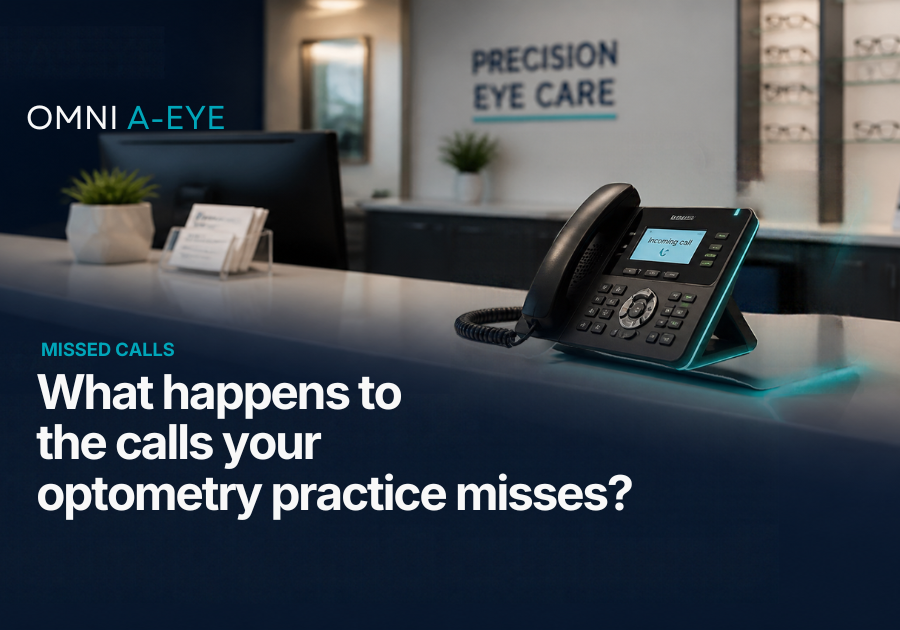
What happens to the calls your optometry practice misses?
By Dr Kuki Hundal, founder of Omni A-Eye
The short answer: often, to the next practice on Google. A patient who wants an eye test doesn’t leave a voicemail and sit by the phone waiting for your callback. They hang up and ring someone else. It happens because your phone is competing with the patient standing at your desk, and the patient wins. The fix is to give the phone its own pair of hands.
Why does the phone always ring at the worst moment?
The phone in an optometry practice has the timing of a cat. It sits there in total silence through the quiet bit after lunch. Then someone comes in to collect their varifocals, someone else wants a frame adjusted, the optometrist is running ten minutes behind and the card machine decides to have one of its moods. That’s when it goes off. Then again. Then a third time, just to make a point.
The person on your front desk is with the patient in front of them. That’s what you pay them for.
Trouble is, reception in an independent practice is six jobs: greeting, dispensing, payments, collections, the diary and the phone. One person does all of them, and the jobs don’t queue politely. They turn up at once. The patient standing there wins every time, and quite right too. So the phone loses, hour after busy hour.
A practice in Falkirk made the same point on its own blog this year. Missed calls, they wrote, are usually down to competing priorities. When several of those land together, nobody can answer every call. (McMahon Opticians)
Asking people to try harder won’t fix it. They’re already flat out, which is why the phone rings out in the first place.
Where does a missed call actually go?
Ring a restaurant on a Friday night, nobody picks up, and you ring the next one. Nobody in history has left a heartfelt voicemail for a table for two.
Your patients do the same. The call rings out, or hits the answerphone, and they ring the practice down the road that happened to pick up. They book their eye test there. Possibly their contact lenses too. Possibly their partner’s.
And you never hear about it. Nobody writes a stroppy review. No gap in the diary comes labelled “missed call”. You just get a quiet Thursday next month, and everyone blames the weather.
So nobody fixes it, because nobody can see it.
The calls that go missing are mostly the easy ones. A routine booking. A contact lens question. Someone asking whether you do OCT. A recall that would have taken ninety seconds.
Then there’s the evening. You close at half five. Plenty of your patients work, so the only time they can ring is lunchtime, when your desk is at its busiest, or after work, when you’ve gone home. They’re calling at precisely the hours nobody can answer.
What do practices usually try?
Most owners reach for one of three things.
Hire another receptionist. The right instinct, and it’s getting harder. Garrey Haase, who runs Yorkshire Eyewear, told Optometry Today in June that his practice would benefit from another member of staff, but the cost rules it out for now. (AOP) Even when you can afford it, the gap between someone leaving and their replacement being any good is yours to carry.
Let it go to voicemail. On an American optometry forum earlier this year, an owner whose receptionist walked out mid-week asked for help. One of the top replies told them to change the voicemail message and send the phones straight to it. (Reddit, r/optometry) That’s a fair way to survive a bad week. As a long-term plan, it has all the commercial merit of a sign on the door reading “Please Go Away”.
Use an answering service. A polite person takes a name and number, and they’re good at it. But they can’t see your diary, so they can’t book anything. Your team still ends up ringing everyone back, usually at the exact moment the next patient walks in.
What does it look like when every call gets answered?
Picture the same moment. Varifocals going out, card machine sulking, phone ringing.
This time it’s answered, in your practice’s name, by a worker that knows your opening hours, your services, your clinicians and what a sight test includes. It books the routine appointment into the diary. Or it arranges a callback. Or, if the caller needs a person, it hands the call over to your team with a note of what’s been said.
Same at seven in the evening. Same on a bank holiday Monday, or the week your receptionist is off with flu.
Your receptionist finishes with the patient at the desk without one ear on the phone. And the person who rang at twenty to seven gets an answer instead of an answerphone.
Dull, I grant you. Most things that work in a practice are.
How OmniDesk closes the gap
OmniDesk is the worker that does this. It’s one of the eight AI workers in the Omni A-Eye workforce, and its job is answering your phone.
It picks up the calls your team can’t reach, and every call once you’ve closed.
It answers from your approved information only: your hours, services, clinicians and policies. If you haven’t told it something, it doesn’t make it up to sound helpful.
It books, reschedules or arranges a callback, following your booking rules.
It hands over to a person when a caller asks for one, and on the rules you set. Questions about someone’s eyes or symptoms go to your team. OmniDesk doesn’t decide whether anything is serious. That’s your clinicians’ job, and it stays that way.
It logs every conversation, so you can read exactly what was asked and what was said.
Some of your patients will want a human, and they should get one. OmniDesk tells callers what it is, and anyone who asks for a person is passed to one.
Your reception team stays exactly where it is. Nobody ever bought a pair of varifocals because of a phone system. They buy them because of the person who helped them choose. OmniDesk takes the calls nobody was free to answer, so that person can keep doing it.
Omni A-Eye is built and led by an ophthalmologist. That’s me. I still work in clinic, and I write the rules for what every worker must never say and the point at which it stops and fetches a person.
Hear what your patients would hear
Most AI demos show you somebody else’s receptionist answering somebody else’s questions. That tells you nothing.
So we build OmniDesk on your practice before we speak, using what’s already on your website. On the call, ring it yourself and play the most awkward patient you’ve ever had. Then we’ll look at where your calls are going, using your own figures.
If it turns out you don’t have a capacity problem, we’ll tell you.
Dr Kuki Hundal
Founder, Omni A-Eye
FAQ
How many calls do optometry practices miss?
Nobody knows for the UK. We looked for an independent survey of missed-call rates in UK optical practices and couldn’t find one. Every figure in circulation comes from someone selling something. To find your own number, ask your phone provider whether they can give you a missed-call report for the last month, evenings and weekends included.
Will an AI receptionist replace my reception team?
No. OmniDesk takes the calls your team isn’t free to answer, plus the ones after you’ve closed. Your people keep the work that keeps patients loyal.
What if a patient wants to speak to a real person?
They get one. OmniDesk tells callers what it is, and anyone who asks for a person is handed over to your team.
Can OmniDesk give clinical advice?
No. It doesn’t diagnose or judge whether something is urgent. Questions about eyes and symptoms go to your team, on rules you set.
Does it answer the phone when the practice is closed?
Yes. Evenings, weekends and bank holidays, in your practice’s name, from your approved information.
Is this a general AI receptionist with an optician’s logo on it?
No. OmniDesk is built for eye care and led by an ophthalmologist. We set it up around your services, your clinicians and your booking rules before it takes a single call.
What does it cost?
We cover that on the demo call, once we’ve seen your call volume and worked out which workers you actually need.
Hear an AI Worker Trained on Your Practice
We configure it on your real services before we talk.